
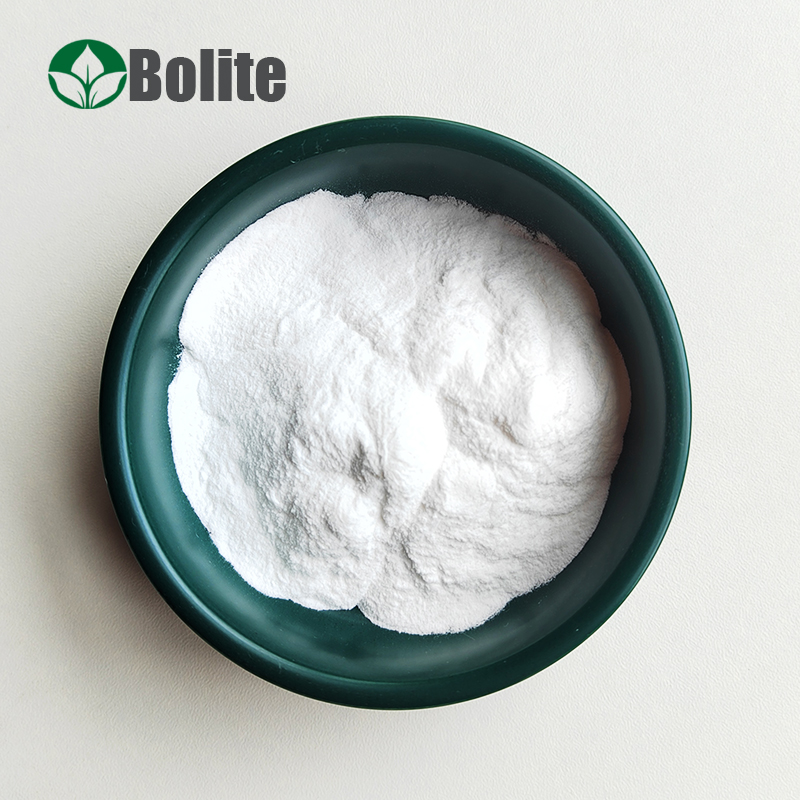
Cosmetic Raw Material Polyglutamic Acid Powder
Product Name: Polyglutamic Acid Powder
Appearance: White Fine Powder
Specification 99%
Grade: Cosmetic grade
CAS NO: 25513-46-6
Sample Free Sample
Description of Polyglutamic Acid Powder
Definition of polyglutamic acid powder
Polyglutamic acid powder (γ-PGA), also known as natto gum and polyglutamic acid, is a water-soluble, biodegradable, non-toxic biological product produced by microbial fermentation. Polymer. γ-PGA polyglutamic acid powder is a sticky substance that was first discovered in "natto" - fermented beans. γ-PGA polyglutamic acid is a special anionic natural polymer, which is composed of amide linkage between α-amino group and γ-carboxyl group. Polyamide (homo-polyamide) γ-PGA has molecular weights ranging from 50,000 to 2 million daltons.
Polyglutamic Acid Powder's moisturizing and water-locking effect is 500 times that of hyaluronic acid. Mainly used for moisturizing, whitening, antibacterial, and improving skin health. Polyglutamic acid was first discovered in the highly viscous string contained in Japanese natto food (fermented soybeans).
Polyglutamic Acid Powder is referred to as γ-PGA in China. It is made of natural natto bacteria and glutamic acid. Biopolymerization is carried out through liquid fermentation to produce decomposable high-molecular amino acid polymers. Features Non-toxic to human body and environment, biodegradable, eco-friendly; water-soluble, can produce odorless, clean and transparent solution; easy to cross-link to form hydrogel with excellent performance in the later stage; can be made into sodium, calcium, magnesium, hydrogen type .
Agricultural applications γ-Polyglutamic acid γ-PGA can be used as plant yield-increasing nutrients
1.Polyglutamic Acid Powder and γ-PGA have super hydrophilicity and water retention capacity. When flooded in the soil, the plants will A thin film is formed on the surface of the root hairs, which not only protects the root hairs, but also serves as the best transport platform for nutrients and water in the soil to come into close contact with the root hairs, which can efficiently improve the dissolution, storage, transport and absorption of fertilizers. Prevents the precipitation of sulfate, phosphate, oxalate and metal elements, allowing crops to more effectively absorb phosphorus, calcium, magnesium and trace elements in the soil. Promote the development of crop root systems and enhance disease resistance.
2. Polyglutamic Acid Powder and γ-PGA balance soil pH. Chemicalbook has excellent buffering ability against acid and alkali. It can effectively balance soil pH and avoid acidic soil caused by long-term use of chemical fertilizers. .
3. Polyglutamic Acid Powder can combine and precipitate toxic heavy metals and have excellent effects on toxic heavy metals such as Pb+2, Cu+2, Cd+2, Cr+3, Al+3, As+4, etc. chelation effect.
4. Polyglutamic Acid Powder can enhance plant disease resistance and stress resistance by integrating plant nutrition and water-active components in the soil to enhance resistance to symptoms caused by soil-borne plant pathogens.
5. Polyglutamic Acid Powder increase can quickly increase the production of tea, fruits, vegetables and other agricultural products, and the production increase can reach 10-20%. Polyglutamic acid is a homopolymerized amino acid composed of glutamic acid monomers linked by amide bonds.
It is environmentally friendly, has super chelating adsorption capacity, super high water absorption and moisturizing capacity, and good biodegradability. The synergistic fertilizer added with polyglutamic acid has significant water retention, fertilizer retention, yield increase, stress resistance and crop improvement. Five major application effects of quality.
Polyglutamic Acid Powder can be divided into two types: aqueous agent and powder according to different indicators such as content and applicable fertilizer formulations. Aqueous agent can be divided into seven types: 1001-1007, and powder can be divided into three dosage forms: 2001-2003. All dosage forms can be applied to the production of chlorine-based, sulfur-based, urea-based, and nitro-based fertilizers, and are suitable for roller, shotcrete, tower, and extrusion granulation!
Effects on the skin The main functions of Polyglutamic Acid Powder in cosmetics and skin care products are moisturizers and skin conditioners.
Polyglutamic Acid Powder is relatively safe and can be used with confidence. It generally has no effect on pregnant women. Polyglutamic acid has no acne-causing properties. . Polyglutamic acid can very well promote the activity of fibroblasts, etc.,
Polyglutamic Acid Powder has a skin-activating effect, and can be used in anti-aging and anti-wrinkle cosmetics; polyglutamic acid with a larger molecular weight does not promote the activity of fibroblasts as well as those with a small molecular weight, but Its properties such as stable foam, moisturizing ability, and adsorption on hair are better than those of small molecular weight products.
Polyglutamic Acid Powder can be used in hair water to antistatic and make hair smooth. Polyglutamic acid has the effect of whitening skin. Uses: Moisturizing, whitening, antibacterial, and improving skin health