
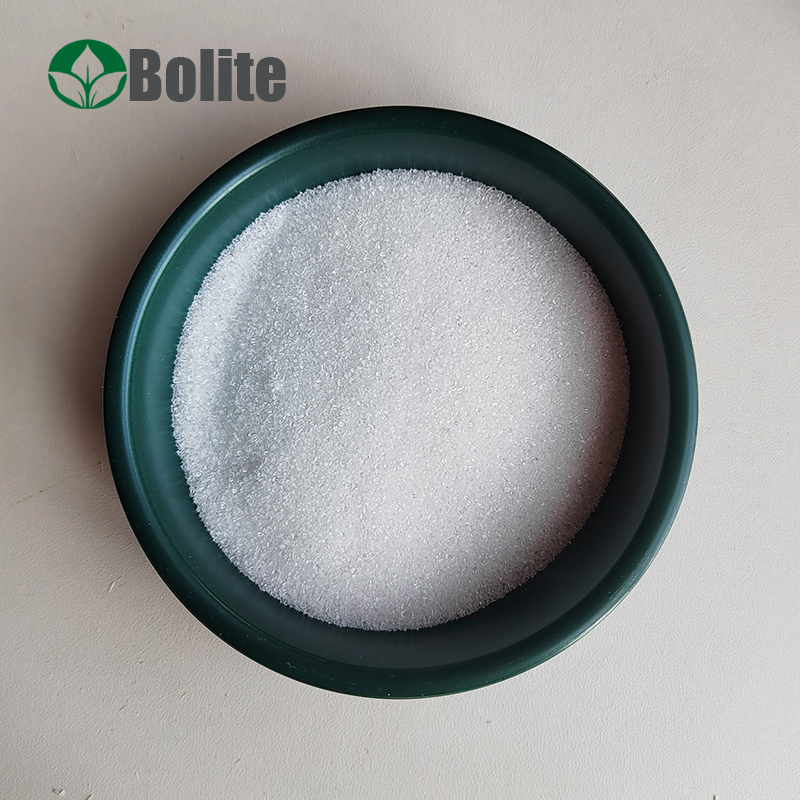
Bolite Ceramide
High-quality Skin care Ceramide Powder
$2000.00
Ceramide 1 (Ceramide 1/EOS)
Molecular structure: C18 carbon chain, no double bond.
Source: Mainly obtained from vegetable oils or animal fats in food.
Mechanism of action: Participates in the formation and stability maintenance of cell membranes, and enhances the repair ability of the skin's natural epidermis.
Cosmetic use:
Moisturizing and repairing: As a conditioning agent, it helps repair the skin barrier and reduce water loss, especially suitable for dry or sensitive skin.
Anti-aging: By enhancing the thickness of the epidermis, improving skin elasticity and reducing wrinkles.
Ceramide 2 (Ceramide 2/NS)
Molecular structure: C16 carbon chain, containing 1 double bond.
Source: Mainly present in the skin, produced by stratum corneum renewal7.
Mechanism of action: Closely related to the skin barrier function, maintaining the moisture balance of the stratum corneum and preventing external irritation.
Cosmetic use:
Barrier strengthening: Commonly used in skin care products that repair damaged barriers to reduce redness and sensitivity.
Moisturizing and locking water: Preventing water evaporation by forming a lipid layer.
Ceramide 3 (Ceramide 3/NP)
Molecular structure: C14 carbon chain, containing 2 double bonds79.
Source: synthesized by the liver and distributed throughout the body7.
Mechanism of action: regulate cell signal transduction, promote the formation of stratum corneum lipid structure, and enhance barrier function79.
Cosmetic use:
Barrier repair: one of the core ingredients, used in repair products for sensitive skin and damaged barriers.
Anti-aging and moisturizing: promote hydration of the stratum corneum, improve dryness and roughness, and delay wrinkle formation.
Ceramide 4 (Ceramide 4/EOH)
Molecular structure: contains polar groups, and the specific carbon chain length is not clearly mentioned9.
Source: may be metabolized by the skin or supplemented externally.
Mechanism of action: synergizes with other ceramides to maintain the stratum corneum lipid structure, but the specific function is less studied.
Cosmetic uses:
Auxiliary moisturizing: often used in combination with other ceramides to enhance the overall moisturizing effect
Ceramide 5 (Ceramide 5/AS)
Molecular structure: not explicitly mentioned, but accounts for 18% of total ceramides9.
Mechanism of action: may work with ceramides 1, 2, and 3 to maintain the intercellular lipid structure9.
Cosmetic uses:
Anti-inflammatory and antioxidant: some studies have shown that it may be involved in anti-inflammatory and antioxidant reactions, but specific applications are rare912.
Ceramide 6 (Ceramide 6/AP)
Molecular structure: contains 3 double bonds79.
Source: produced by intestinal flora metabolism.
Mechanism of action: related to immune regulation and plays a role in inflammatory responses
Cosmetic uses:
Anti-inflammatory repair: Suitable for auxiliary repair of inflammatory skin problems (such as acne and dermatitis)
Summary: The focus of cosmetic applications of different ceramides
Type Core function Applicable scenarios
Ceramide 1 Barrier repair, anti-aging Dry and sensitive skin repair, anti-wrinkle products
Ceramide 2 Barrier strengthening, water lock Daily moisturizing, sensitive skin care
Ceramide 3 Barrier reconstruction, deep moisturizing Barrier damage repair, anti-drying
Ceramide 4 Auxiliary moisturizing Compound ingredients to enhance moisturizing effect
Ceramide 5 Anti-inflammatory and antioxidant Anti-inflammatory skin care products (less research)
Ceramide 6 Anti-inflammatory regulation Auxiliary care for inflammatory skin problems
Supplementary instructions
1. Compound use: Cosmetics often use a combination of multiple ceramides (such as 1, 3, 6) to simulate the natural stratum corneum lipid structure to achieve a better barrier repair effect.
2. Concentration and safety: Ceramides are mostly water-soluble lipids with good solubility (soluble in water, ethanol, etc.). The common concentration in cosmetics is 3%-10%312.
3. Combination with other ingredients: Ceramide can be used in combination with niacinamide. The former repairs the barrier, while the latter whitens and brightens the skin, but attention should be paid to tolerance.